Wednesday, 30 May 2012

The significance of a dress

Another type of surgery, which began in April, through our 5 month service here was that of gynaecological repairs, following obstructed labour. Vesico-vaginal fistulas are holes or tears, which occur following prolonged labour, which in the Western world would normally progress to an intervention before the baby or mother is put at risk. However, without proper obstetric care the pressure of the baby's head onto the surrounding tissues causes them to become necrotic and die, causing holes to develop between the bladder, vagina, rectum and other tissues. This leaves them leaking stool or urine constantly and outcast from communities and families. Many husbands will leave them and they are left to suffer alone. One woman on the ward this year told the nurses that she was made to live in a hut by herself and if she tried to go to the village well to get water people would throw rocks and sticks at her as they were afraid that she would pass the condition to them.

They would come to be admitted with their heads hanging in shame and would become very upset when they leaked but also came with an air of resignation as this had been something that they had been putting up with for so many years. You would see the transformation take place on the wards where often for the first time they were shown love, care and the fact that they mattered despite what they had been defined by for so long.

Many of the women in the photos below have been on waiting lists for fistula repair since the ship was last here in 2010 and the difference the operation makes to their lives is just impossible to explain. For some of them the incontinence has been there for over 10 years and has wrecked the normal life they knew before. Following their operations they are given a new dress and a service to praise and thank God for all his work in their lives. Some of the women are just so inspiring in their faith in God despite their past sufferings and even when the operations fail to have the so wanted impact they praise and trust in Him who holds all and who is faithful even when we may not understand.

There was one lady, Fati, who touched me the most as she had had recurrent and complicated operations to repair fistulae years after the initial delivery. Unfortunately she had a very eventful post op recovery and even with repeated attempts we failed to make her dry. Despite this, one day when I was examining her wound which had become infected, she lifted her hands and was full of joy praising and thanking God for bringing her here and looking after her. As the field service draws to a close she is still here as is not quite fit for discharge and we hope to be able to pass her care onto a nearby mission hospital. Pray that though we haven't been able to help her physically God would continue to strengthen and keep her, giving her perseverance and joy in Him who never leaves or forsakes us.


Some links to articles explaining more about the impact of VVFs on women in developing countries and the work of the Hamlins in Adis Ababa, Ethiopia.

http://www.christianitytoday.com/ct/2010/january/17.48.html

http://blog.christianitytoday.com/women/2011/03/mother_teresa_of_our_age_talks.html

http://www.christianitytoday.com/ct/2010/january/18.53.html


A good book to read is Hospital by the river, describing the work of the Hamlins in Ethiopia.


A film which details more of these women and their suffering is A Walk to Beautiful, which also shows the Fistula Hospital and follows a number of women from their struggles from their home villages to their operations.


The work amongst these women reminded me of the story of Jesus healing the woman who had been bleeding for 12 years (Luke 8 v43 - 48). Praise to God who sees the suffering of these women over all the years and has compassion upon them. Many of those who came to us were from the North of Togo, where the majority are Muslim, so pray for our women to go back home having seen and heard, maybe for the first time, more of Jesus. May they declare of his power and compassion to those villages and communities they live amongst.


Dress ceremonies with the patient life team


Fati and Molly

Sunday, 13 May 2012

Grace


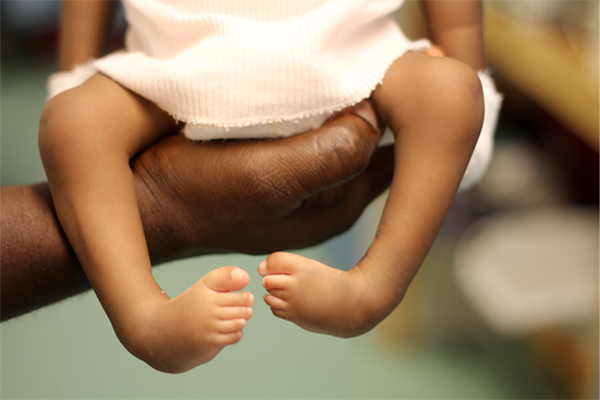
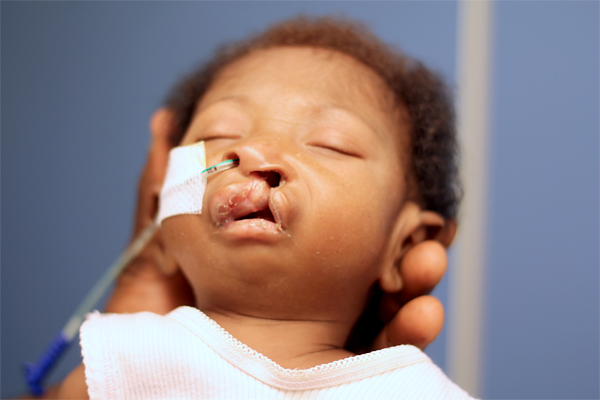
I just wanted to share about a little baby with a cleft lip and palate who had been seen by those in the infant feeding programme (this serves to bring those babies who are underweight and malnourished up to weight in order for them to be able to have their operations).

Her name is Grace. She was born to parents who are missionaries in Benin and is 10 weeks old. She weighs 3kg and has not put on weight since her birth despite her parents feeding her as much as her tiny body will allow; a few drops every half and hour. I was called to see her by the dietician who was concerned that she was looking much worse. Most of the tiny volume of formula that they have been able to get down her seems to be going into her lungs. Add to this her cleft lip, palate and the congenital malformation of her jaw and the work of her breathing is maximised and laboured. When I saw her she looked very distressed and sick and I knew I was faced with the difficult decision of what we could do.

Ultimately we are not a medical facility; we are a surgical ship, which is able to do a limited number of specialised operations. This may seem like a hard and callous boundary to draw but I have learnt over the time being here it is an important distinction to make. Ultimately our patients generally tend to be medically healthy and the bed a medical patient takes up is one which could potentially block another of the countless patients we have turning up to the dock every day. Also, as we have a limited period of time being in a country, this is something which has to seriously be taken into account. These are questions which are almost impossible to ask and even more difficult to answer. Who are we to be choosing? Struggling with these kind of quesitons over the weeks I have learnt the only thing we can do is to bring this all under the will of God and attempt to discern the answers in some way, trusting in his sovereignty and direction.

After many discussions with the chief medical officer, anaesthetists, hospital managers and other people we came to the decision that we had to do something to help to get her over her acute illness, if possible. A feeding tube was placed and she was started on antibiotics to help with her chest infection. We also saw God's amazing hand of provision and grace as the staff working both on the day shift and night were intensive care paediatric nurses, completely at ease and very excited about a familiar kind of patient for them!

Unfortunately after a seemingly promising first day she took a turn for the worse. Her breathing became more laboured and she began to no longer tolerate the feeds. We did a chest X-ray, which showed that her heart was massively enlarged. We do not have the technology here to further diagnose or clarify but this showed us that she would not be able to tolerate an operation, even if we could get her to the weight needed. Add to this the likelihood that her heart will continue to fail without a massive surgical intervention and it was down to us to tell the parents that her condition was incurable and without a miracle would cause her life to be shortened.

Her parents are missionaries in Benin and have been working there for the past 8 years, ministering to the voodoo villages and strongholds in the south of the country. They have another 3 girls; 10, 8 and 5 years old; Testimony, Favour and Miracle. The mother had been through so much over the months prior to Grace being admitted with us; she had just lost her mother, had been admitted herself to an ITU being critically ill with complications from diabetes and had been struggling with Grace's birth and coping with the subsequent 10 weeks.

We were waiting for the father to arrive from Benin, where he was with his other children, before telling them the news. We had called them to come as soon as they could as we didn't know whether or not she would survive the night with her oxygen saturations being so low.

I was paged later on that evening to say he had arrived. He had been found at the port gate, exhausted and hungry. They had spent the last of their money searching desperately for a cure for Grace. They had been promised that through various investigations something could be done, but they had just given all of their money away. He had set off from Contonou, Benin that morning but as he had run out of money had had to run between the taxis he could afford.

Speaking to him that evening was so difficult; he kept on clutching at any hope we would give him. This involved questions about taking Grace to the West and when I said that a baby as broken as Grace may not survive in a western hospital he suggested the option of taking her to a pastor in Nigeria to have her prayed over. Trying to put it as directly as I could that she may not survive the journey to either of us these places, let alone even last the night. He said simply that we would have to trust God for the miracle and that whatever his will was was the right plan.

This simple, child like faith that God could and may fulfill his promises challenged me. Am I being too worldly and medically focused? If it was possible is this not a miracle? Am I limiting God to my own thoughts?

Please be praying for them all as a family, as they go through these deep waters. That they would know God's presence and comfort and would be able to say as with Job 'The Lord gives and takes away, may the name of the Lord be praised'.